
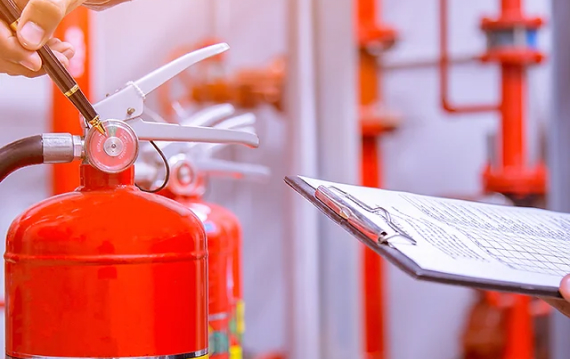
Many businesses assume a fire safety inspection is mostly about the equipment hanging on the walls. The extinguishers get serviced, the exit signs glow, and everyone expects a clean result. Then the inspector asks for the annual report and the conversation changes very quickly.
Building owners, facility managers and tenants across Victoria run into the same gap, because compliance rests on paperwork as much as hardware. Knowing how to prepare for fire safety inspection visits well before one is scheduled turns a stressful morning into a formality, and it costs far less than fixing problems under a notice.
Key Takeaways
- Inspections assess three separate things. Equipment condition, building fabric and layout, and documentation. Most businesses prepare only for the first.
- Your occupancy permit or maintenance determination is the master list. It names every essential safety measure that applies to your building, and each one has to be maintained.
- The owner prepares the Annual Essential Safety Measures Report. Under the Building Regulations 2018, it is compiled yearly, kept on the premises and produced when the municipal building surveyor or chief officer asks.
- Service records belong on site. Logbooks held by your contractor are of no use to an inspector standing in your foyer.
- The most common failures are preventable. Overdue service tags, blocked exits, propped fire doors, failed emergency lighting and a missing annual report account for most findings.
- A lease can shift maintenance tasks, never the legal duty. Tenants may maintain equipment inside their area, though the statutory obligation stays with the building owner.
- Failing carries escalating consequences. Rectification notices, building notices and orders, and in serious cases a prohibition on occupying part or all of the building.
What Fire Inspectors Typically Check
Inspections look at three separate things, and most businesses only prepare for one of them.
The first is the physical equipment. Extinguishers, hose reels, hydrants, sprinkler systems, fire indicator panels, exit signs and emergency lighting all get a visual check, along with their service tags.
The second is the building fabric and layout. Fire doors that close and latch properly, exits that open freely, paths of travel kept free of obstruction, and smoke seals intact.
The third is documentation, and that is the one catching people out. An inspector wants evidence that everything has been maintained at the intervals your building requires, signed off by someone qualified to do it.
The Paperwork That Decides Most Inspections
Three documents carry the weight here, and your fire inspection requirements flow from them.
Your occupancy permit or maintenance determination lists the essential safety measures installed in your building. This is the master list. Everything on it has to be maintained, and nothing comes out of service unless approval is granted.
The Annual Essential Safety Measures Report confirms each of those measures has been maintained across the past twelve months and remains capable of performing to its original standard. Under the Building Regulations 2018, the owner prepares this each year, keeps it on the premises, and produces it when the municipal building surveyor or the chief officer asks. It is the centrepiece of any annual fire safety inspection.
Service logbooks and records sit underneath both. AS 1851 sets routine service intervals for fire protection systems, and the records show each one happened on time. One of the biggest mistakes businesses make is storing these off site with the contractor. An inspector standing in your foyer wants them on hand, never emailed through next week.
Common Fire Inspection Failures
These common fire inspection failures come up repeatedly, and every one of them is preventable:
- Missing or outdated annual reports. The measures were maintained, nobody compiled the report
- Blocked exits and paths of travel. Stock, bins, pallets or furniture stored in an egress path
- Fire doors propped open. Usually with a wedge, usually for convenience, and an immediate failure
- Exit and emergency lighting faults. Dead batteries that fail the 90 minute discharge test
- Overdue equipment servicing. Tags showing a date that passed six months ago
- Obstructed equipment. Hydrants behind shelving, extinguishers hidden by stacked boxes
- No current evacuation diagrams. Missing entirely, or showing a layout from before the last fit-out
- Untrained occupants. No wardens appointed, no evacuation exercise on record
- Alterations never assessed. A new partition wall or mezzanine that changed the fire compartments
Your Pre-Inspection Walkthrough
If you want to prepare for a fire safety inspection, start with a walkthrough. Check each item against what you can physically see:
- Every extinguisher present, charged, tagged within date and mounted at the correct height
- Hose reels and hydrants accessible with nothing stored in front
- Exit doors opening freely from inside with no deadlocks or chains
- Fire doors closing and latching on their own
- Emergency and exit lighting illuminated, with recent test records
- Paths of travel unobstructed from end to end
- Evacuation diagrams current, correctly oriented and displayed where required
- Fire indicator panel showing normal status with no isolations left active
- Service tags checked for overdue dates
Anything you find now is a maintenance job. That same item found during an inspection becomes a notice with a deadline attached.
If Your Building Fails an Inspection
The consequences scale with the severity of what gets found, and they make business fire safety compliance a matter of real commercial importance.
Minor issues usually bring a notice with a period to rectify, followed by a re-inspection. Serious defects can lead to a building notice or a building order from the municipal building surveyor. Where the risk to occupants is immediate, a prohibition on occupying part or all of the building becomes possible, and penalties apply under the Building Act for failing to maintain essential safety measures.
The flow-on effects often hurt worse than the penalty itself. Insurers ask about compliance history after a claim. Tenants and their lawyers ask during lease negotiations. A building order on the record follows a property through its next sale.
Building a Twelve-Month Compliance Rhythm
Businesses that pass comfortably treat business fire safety compliance as a calendar, never an event. Service intervals vary by system and by what your maintenance determination specifies, and the pattern generally looks like this:
| Frequency | Typical activity |
|---|---|
| Monthly | Visual checks of extinguishers, exits, paths of travel and panel status |
| Six monthly | Equipment servicing across most portable and fixed systems |
| Annually | Full testing, emergency lighting discharge test, and the annual report |
| Five yearly | Extended service on extinguishers, hydrants and hose reels |
Confirm your own intervals against your maintenance determination, since buildings differ. Assign one person as the record keeper, and book the annual report compilation a month before it falls due instead of the week it does.
Who Carries the Obligation, Owner or Tenant
This causes more disputes than any other part of fire safety audit preparation.
The building owner holds the statutory duty for essential safety measures under the Building Regulations. Leases frequently pass some maintenance responsibility to tenants, particularly for equipment inside the leased area. That arrangement is contractual, and it does nothing to shift the statutory obligation away from the owner.
Read your lease before the inspection, map who maintains what, and put it in writing. Tenants who have altered a fit-out should raise it early, since partition changes affect compartmentation and detection coverage.
Getting Your Team Ready for the Day
Equipment and records carry the result, and people still make a difference on the morning itself.
Nominate someone to meet the inspector and walk the building with them. That person needs access to every locked area, including plant rooms, risers, roof access and any tenancy that stays shut. An inspection stalled at a locked door looks like avoidance, even where it is simply a missing key.
Brief your wardens beforehand. Inspectors often ask a staff member where the nearest exit is, or who the chief warden is on that floor. Confident answers say more about your culture than any folder does.
Keep a single compliance file, either a folder in the building or a digital one someone can open on a phone. It should hold the occupancy permit, the current annual report, service records for the past two years, evacuation diagrams and your training register. Anyone asking how to pass a fire safety inspection with the least friction will find most of the answer lives in that one file being complete and reachable.
Schedule your own internal check a month ahead of the annual fire safety inspection window, so corrections happen on your timeline in place of somebody else’s.
Final Word
Passing an inspection comes down to habits built across the year, along with records you can hand over on the spot. Walk your building, check the tags, find your occupancy permit and confirm your annual report is current.
Victorian Fire Protection carries out fire compliance audits and annual reports alongside equipment servicing, panel work and warden training from Derrimut. A conversation before your next inspection gives you time to fix what turns up, which is the whole point of how businesses can prepare for fire safety inspections properly.
FAQ's
The building owner prepares and signs the report. It is based on records from the qualified people who carried out the maintenance. Please keep the service paperwork together with the report so it is easy to find.
Some older buildings were built before the current system began. You can ask your local council’s building surveyor for a maintenance determination, which lists the safety measures that apply to your building.
Not without approval. Essential safety measures cannot be taken out of service unless permission is given, and temporary arrangements are usually needed. Please speak with your building surveyor before any work begins.
No, the report covers the whole building and the owner prepares it. If you are a tenant and maintain equipment inside your leased area, please give your service records to the owner so they can be included.
Please keep logbooks and service records at the premises for as long as your maintenance determination and the relevant standards require. Many owners keep the last several years of records to be safe.
Don’t worry, your service contractor can usually reissue records from their own system. Rebuild what you can and start keeping proper records straight away, because gaps in records can raise questions.
It depends on the building class and its occupancy permit. A home used for a small business may have different requirements, so please confirm with your building surveyor.
Yes, AS 3745 sets out emergency planning for facilities, including training and exercises. How often you need to hold them depends on the facility, and you should keep records of each exercise.
It varies. Some visits are booked ahead, while others are unannounced, especially after a complaint or when an earlier notice is still open. Keeping your building ready for inspection all year round means you never have to guess.
Often, yes, as long as they are qualified for each type of system. Using one provider keeps your records in one place and makes the annual report easier to put together. Please check which systems they are qualified to service before you sign anything.